
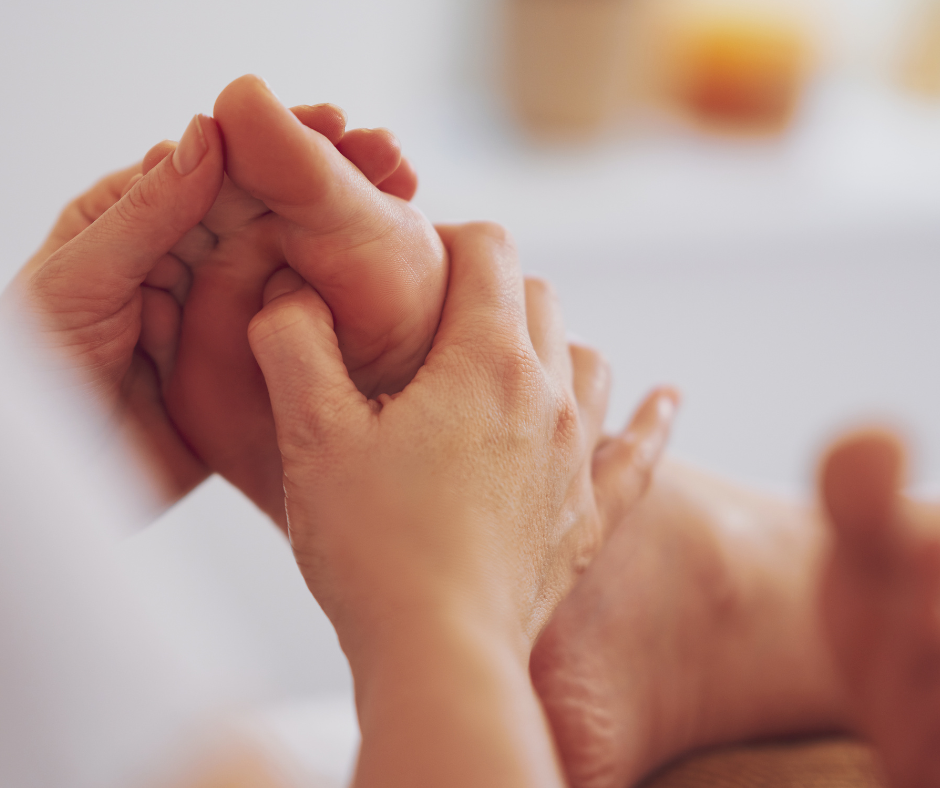
Pain in the ball of the foot rarely shows up all at once. More often, it sneaks in gradually as the front of the foot starts taking on more stress than it can comfortably handle. There’s usually no single injury to point to, which is why many people brush it off at first. But as that extra pressure adds up day after day, the tissues under the toes become irritated, and what started as a mild ache turns into pain that’s harder to ignore with every step.
In most cases, this type of pain develops because the forefoot is absorbing more load than it was designed to manage. That extra stress can come from foot structure, changes in activity, footwear choices, loss of natural cushioning with age, or subtle biomechanical shifts that push pressure forward. Over time, the tissues beneath the metatarsal heads—where the ball of the foot bears weight—become irritated and inflamed.
This kind of pain isn’t a sign that something is “broken.” It’s a sign that the tissues are overloaded. And that distinction matters, because it completely changes how we approach treatment.
Why Rest Alone Often Doesn’t Fix Forefoot Pain
Many patients try resting, icing, or reducing activity. While this can calm symptoms temporarily, it often doesn’t solve the problem. That’s because the underlying tissues are frequently in an energy-depleted, inflamed state. Even when you rest, those tissues may not fully recover if the local biology hasn’t shifted.
This is where Class IV laser therapy becomes useful.
Laser therapy helps tired, irritated tissue recover by improving how well it functions at a basic level. In simple terms, it helps cells do their job more efficiently so stressed tissue can repair itself instead of staying stuck in a cycle of irritation. It also improves local blood flow and helps calm inflammation, which is especially important in the forefoot where circulation is often already under strain.
Patients often notice that pain becomes less sharp or less persistent over a series of treatments, even before major mechanical changes are made.
Why Laser Alone Isn’t Enough
Here’s the critical part that often gets missed: reducing inflammation doesn’t change how force moves through the foot.
If the same metatarsal head continues to take excessive pressure with every step, symptoms will return. That’s why laser therapy works best when it’s paired with a plan to redistribute load.
This is where orthotics play a central role.
Custom orthotics are not about “fixing” the foot. They’re about changing how pressure is shared across it. By supporting the arch and controlling motion, orthotics can offload stressed metatarsal heads and reduce repetitive strain on already-irritated tissue. When pressure is redistributed, healing supported by laser therapy has a chance to hold.
Think of laser therapy as improving tissue health, and orthotics as improving the environment those tissues live in.
Why This Combination Makes Sense Clinically
When laser therapy is used alone, symptoms may improve but plateau. When orthotics are used alone, pain may decrease slowly, especially if inflammation is already well established. Together, they address both sides of the problem: biology and mechanics.
This approach also allows many patients to stay active during treatment rather than stopping everything. As inflammation calms and load is better distributed, walking becomes more comfortable instead of progressively painful.
What Patients Often Notice First
Patients don’t usually describe this as a dramatic overnight change. Instead, they notice that pain shows up later in the day, feels less intense, or no longer dominates their attention with every step. Over time, that quieter pain signal allows tissue recovery to continue rather than constantly resetting.
That’s real progress—even if it’s subtle at first.
A Smarter Way to Treat Forefoot Pain
Metatarsalgia isn’t something to “burn, freeze, or inject away” without understanding the forces involved. It’s a signal that the forefoot is doing too much work.
By calming inflammation with Class IV laser therapy and redistributing pressure with orthotics, we can often reduce pain without masking it or rushing into invasive options.
If you’re dealing with persistent ball-of-foot pain that hasn’t responded to rest or shoe changes alone, it may be time to look at both tissue health and mechanics together.
📞 Call Lighthouse Foot and Ankle Center at 207-774-0028 or schedule a visit to discuss whether laser therapy and orthotics are appropriate for your specific pattern of pain—so you can move into spring and summer more comfortably, step by step.
