
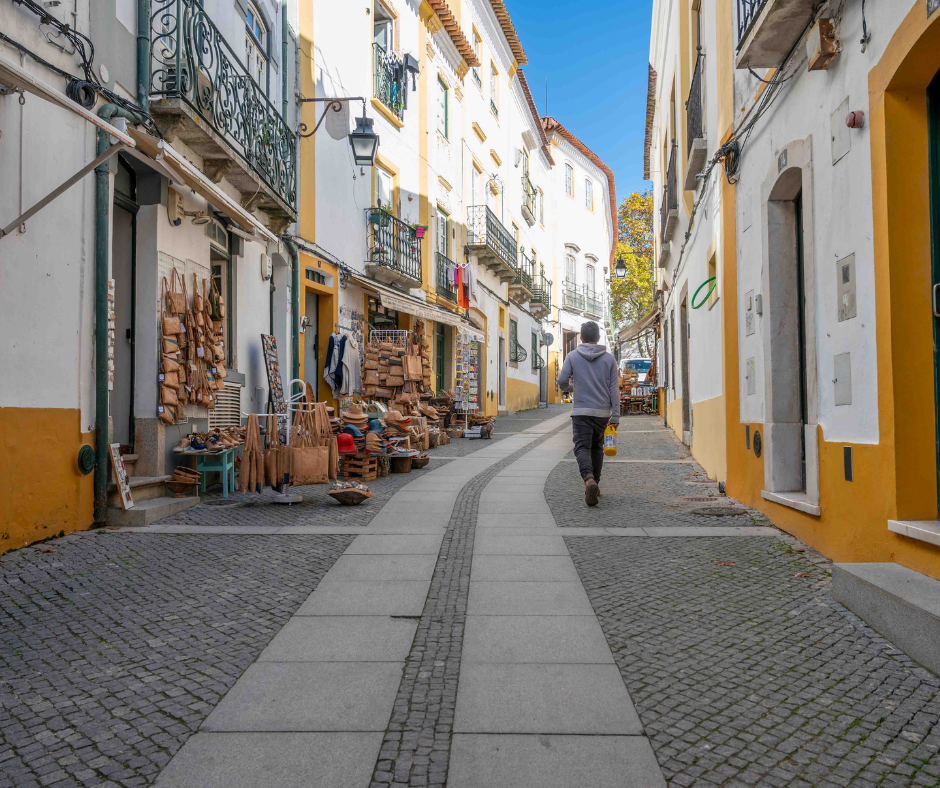
Understanding those differences—and preparing for them—can make the difference between enjoying your trip and managing avoidable foot pain.
Portugal has become one of the most popular destinations among my patients, and it’s easy to understand why. The food, the pace of life, and the walkability make it incredibly appealing. What surprises many travelers is how differently various regions challenge your feet. Lisbon and the Algarve may be in the same country, but they place very different demands on your skin, muscles, and joints.
If Your Trip Includes Lisbon
Lisbon is beautiful, historic, and physically demanding. Steep hills, stairs, and uneven cobblestones place constant stress on the feet and ankles. Walking often feels manageable in the moment, but by evening many travelers notice heel pain, calf tightness, or forefoot soreness they didn’t anticipate.
Preparing for Lisbon means training for real terrain. Outdoor walking is more useful than treadmill miles, especially if you can include hills or stairs. Wearing the shoes you plan to bring on these walks is essential. If something causes even mild discomfort at home, it’s unlikely to behave better on Lisbon’s streets.
Footwear should be supportive, stable, and already broken in. Thin soles and narrow shoes increase fatigue and friction on uneven surfaces. Vacation is not the time to break in new shoes.
Pedicures before a Lisbon trip should be conservative. Aggressive callus removal or cuticle cutting can leave the skin fragile, increasing the risk of blisters and small skin injuries when combined with long walking days and hills.
If Your Trip Is Centered in the Algarve
The Algarve is more relaxed, but it presents a different challenge for your feet. Warm temperatures, sandals, sand, and moisture all affect the skin barrier. Feet that are too dry crack more easily, while feet that stay damp for long periods become fragile and prone to irritation.
Preparation here focuses on balance. Consistent moisturizing in the weeks before travel helps skin tolerate heat and friction. Moisturized skin is more resilient. Sandals should have some structure and a stable sole rather than being completely flat. Walking barefoot for long distances, even on smooth surfaces, often leads to soreness or skin breakdown.
Pedicures can be reasonable before an Algarve trip, but they should emphasize gentle care. Over-thinning calluses often backfires in sandy, salty environments where skin is exposed to repeated friction.
What to Do If You Get a Blister While Traveling
Blisters are common on trips with long walking days, and how you handle them matters. The most important step is to reduce friction as soon as you notice irritation. Continuing to walk through pain almost always makes the blister larger and more painful.
If a blister forms but is intact, avoid popping it. The roof of the blister acts as a natural protective barrier. Covering the area with a light layer of petroleum jelly or antibiotic ointment reduces friction and protects the skin. A non-stick dressing or hydrocolloid bandage can then be placed over it to cushion the area.
If a blister opens on its own, keep it clean and protected. Gently cleanse the area, apply petroleum jelly or antibiotic ointment, and cover it with a breathable bandage. Change the dressing daily or if it becomes wet or dirty. Leaving an open blister uncovered increases the risk of infection, especially in warm or humid conditions.
Past blisters often predict future blisters. Pay attention to your footwear after a blister develops. Adjusting shoes, socks, or adding padding can prevent repeated irritation and allow healing to continue while you’re still active.
Before You Travel: Schedule a Pre-Trip Foot Evaluation
Lisbon challenges endurance, balance, and structure. The Algarve challenges skin integrity and moisture control. Neither requires perfect feet—but both reward preparation.
If you’re planning a Portugal trip in the next 1–6 months, a Pre-Travel Foot Evaluation can help identify potential issues before they become problems on the road. This visit is designed to help you walk more comfortably and reduce the risk of blisters, pain, or setbacks during your trip.
During a pre-travel evaluation, we focus on how your feet will respond to prolonged walking, uneven terrain, and travel conditions. We assess foot structure, skin health, gait, and footwear choices, and we talk through strategies to reduce friction, fatigue, and overload. When appropriate, we may recommend additional support or adjustments to help your feet tolerate hills, cobblestones, and long days more comfortably.
This type of visit is especially helpful if you already deal with heel pain or plantar fasciitis, forefoot pain or neuromas, recurring blisters, nail issues, or foot deformities that tend to cause shoe irritation.
Addressing these concerns before travel is far easier—and far less stressful—than trying to manage them while you’re away. Heel pain can get worse on vacation rather than better.
Ready for Your Portugal Adventure?
If foot pain, blisters, or past travel-related issues have made you hesitant about walking-heavy trips, now is the time to address them.
📞 Call Lighthouse Foot and Ankle Center at 207-774-0028 to schedule a visit before your trip. We’ll help you prepare so your feet support your experience—rather than limit it.
A short pre-travel evaluation can help identify problem areas, fine-tune footwear choices, and reduce the risk of foot issues interfering with your plans.
Your feet should support the experience—not limit it!
