
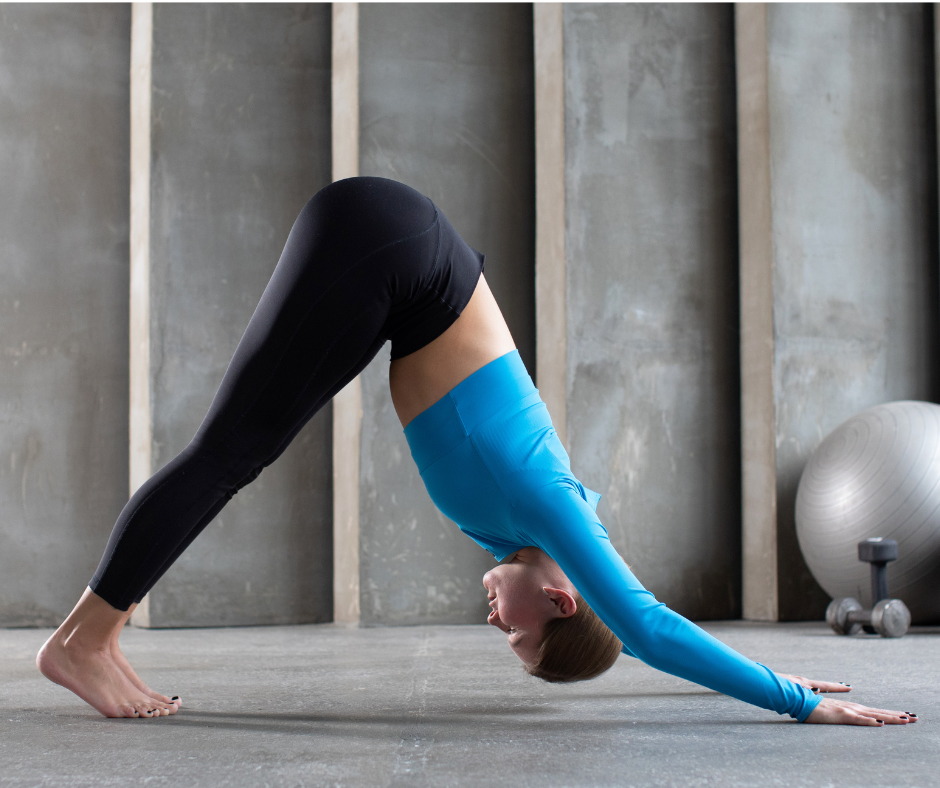
Yoga is often recommended for flexibility, strength, and recovery. But occasionally patients are surprised when a pose that looks simple—like Downward Dog—causes pain in the big toe joint.
I see this in the office more often than you might expect. The discomfort usually shows up when the toes are bent upward and bearing weight. If the big toe joint is already irritated or stiff, this position can quickly make it known.
Understanding why it happens can help you decide what to do next.
What’s Happening in the Big Toe Joint
The big toe joint is called the first metatarsophalangeal joint (1st MTP joint). It plays a major role in walking, running, and balance.
In Downward Dog, the toes are forced into dorsiflexion—a position where the toes bend upward toward the top of the foot while body weight presses down through them.
If the joint is healthy, this usually feels like a stretch.
But if there is underlying irritation, inflammation, or stiffness, the pose can become painful.
Common causes include:
1. Functional Hallux Limitus (stiff big toe joint)
Some people simply do not have enough upward motion in the big toe joint. When the pose forces the motion beyond what the joint can comfortably do, pain occurs.
2. Early Arthritis (Hallux Rigidus)
Degenerative changes in the joint cartilage can make upward bending painful. Many patients first notice this during activities that require toe dorsiflexion—like lunges, push-ups on the toes, or yoga poses.
3. Joint Capsule Inflammation
The soft tissue around the joint can become inflamed from repetitive loading, tight footwear, or increased activity.
4. Sesamoid Irritation
Two small bones under the big toe help with push-off. If these structures are irritated, loading the forefoot in poses like Downward Dog can trigger discomfort.
5. Prior Injury
A previous sprain, turf toe injury, or fracture can leave the joint sensitive to certain movements.
What Can You Do During Yoga?
If the pose is painful, forcing through it usually makes things worse.
Instead, try modifying the position:
- Lift the heels slightly to decrease pressure through the forefoot
- Shift more weight into the hands temporarily
- Place a folded towel under the toes to reduce the degree of bending
- Skip the pose entirely while the joint is irritated
Pain is feedback. Ignoring it rarely leads to improvement.
Treatments That May Help
If the discomfort continues, there are several treatments that can calm the joint and restore movement.
Local anesthetic injection (lidocaine)
A diagnostic lidocaine injection can temporarily numb the joint. If pain improves immediately, it confirms the joint itself is the source of the problem.
Steroid injection
A small corticosteroid injection can reduce inflammation inside the joint capsule. This often provides significant relief when arthritis or capsulitis is present.
Class IV laser therapy
Laser therapy helps reduce inflammation and stimulate tissue healing. It is a non-invasive option that many patients prefer before considering injections.
Footwear modification
Shoes with a stiffer sole or rocker bottom can reduce motion through the painful joint during daily activity.
Custom orthotics
Orthotics can help control abnormal motion of the big toe joint and offload pressure during walking.
The Goal: Keep You Moving
Yoga is meant to improve mobility and overall health—not create new pain.
If your big toe joint hurts in Downward Dog, it usually means the joint is asking for attention. The earlier it’s addressed, the easier it is to calm the inflammation and keep you doing the activities you enjoy.
When to Get It Checked
If you notice:
- Pain in the big toe joint with yoga or push-off
- Swelling or stiffness in the joint
- Difficulty bending the toe upward
- Pain that keeps returning
it may be worth having the joint evaluated.
At Lighthouse Foot & Ankle Center in Scarborough, Maine, we regularly help patients diagnose and treat big toe joint pain so they can stay active—whether that means yoga, walking the beach, or simply getting through the day comfortably.
We Can Help!
If your big toe is limiting your movement, don’t ignore it.
Schedule an evaluation at Lighthouse Foot & Ankle Center so we can determine the cause and create a treatment plan that gets you back to moving comfortably.
📍 23 Spring St. Suite B, Scarborough, Maine
📞 207-774-0028
🌐 www.lighthousefootandankle.com
