

One of the most common questions we hear is:
“Can fungal toenails really improve?”
The answer is yes—but it takes a comprehensive approach, consistency, and patience.
Today we’re sharing a real patient success story. We have the patient’s permission to share these before-and-after photos, and she was thrilled with her results.
Before Treatment
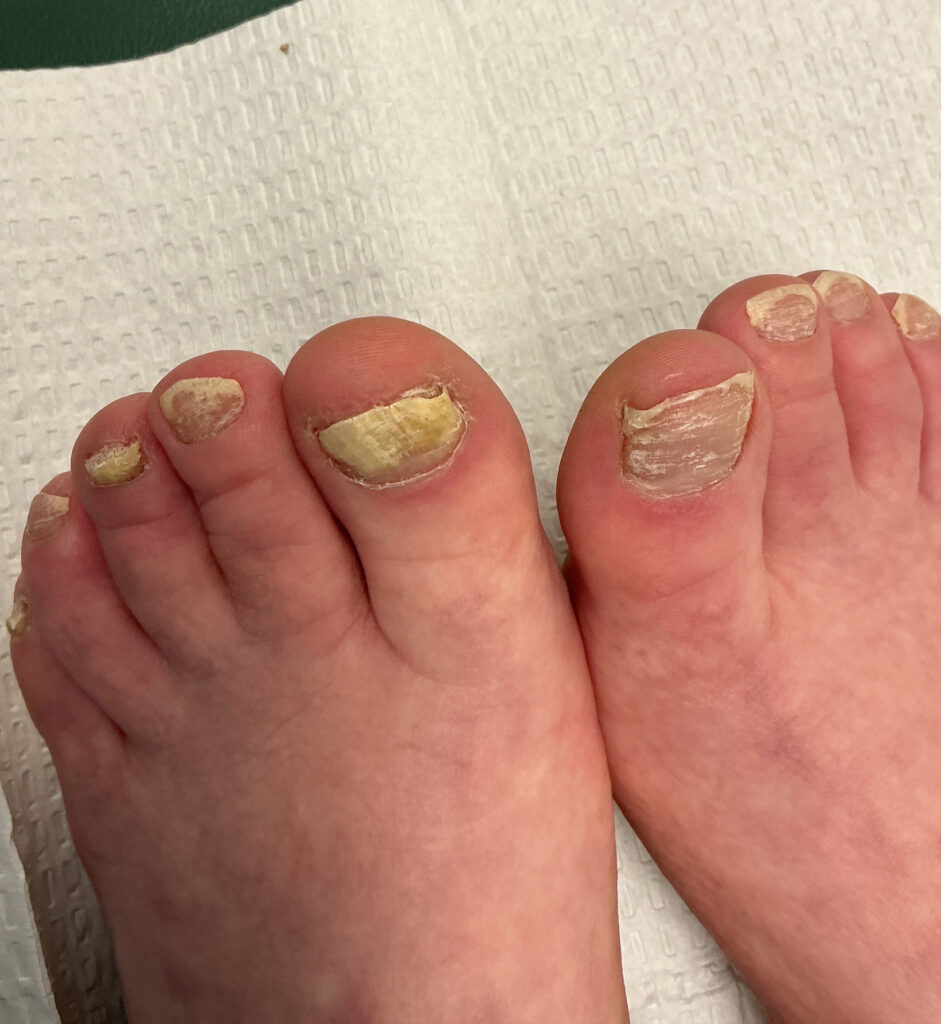
When this patient first came to our office on March 2, 2026, she had fungal involvement affecting multiple toenails on both feet.
Common findings included:
- Thickened nails
- Yellow and white discoloration
- Brittle, crumbly nail plates
- Significant cosmetic concerns
Like many patients, she had been dealing with the problem for years and was frustrated by the lack of improvement.
Before Treatment
Our Multi-Modal Treatment Plan
Rather than relying on a single treatment, we used a comprehensive protocol designed to address the fungus from multiple angles.
Class IV Laser Therapy
The patient completed a series of 5 Remy Class IV laser treatments, performed approximately every two weeks.
Laser therapy allows us to target the affected nails while avoiding many of the limitations associated with topical treatments alone.
Oral Antifungal Medication
The patient was prescribed:
- Weekly fluconazole
Topical Antifungal Therapy
The patient applied:
- Daily Tavaborole
Daily Foot Hygiene Protocol
To support healthier skin and nails, the patient also used:
- Lighthouse Daily Defense Spray
- Lighthouse Restore Serum
Both products contain hypochlorous acid and were used as part of her daily foot care routine.
Why Consistency Matters
One of the biggest misconceptions about fungal nail treatment is that improvement happens quickly.
Toenails grow slowly.
The yellow, damaged nail you see today is often the result of months—or even years—of fungal activity.
A useful analogy is rotted wood:
You can’t un-rot wood. You have to replace it.
The same principle applies to fungal nails. Once a nail becomes damaged, the goal is to create an environment where healthy nail can grow in and gradually replace the diseased nail.
That’s why successful treatment requires:
- Treating the fungus
- Preventing reinfection
- Allowing time for healthy nail growth
Results After 4 Months
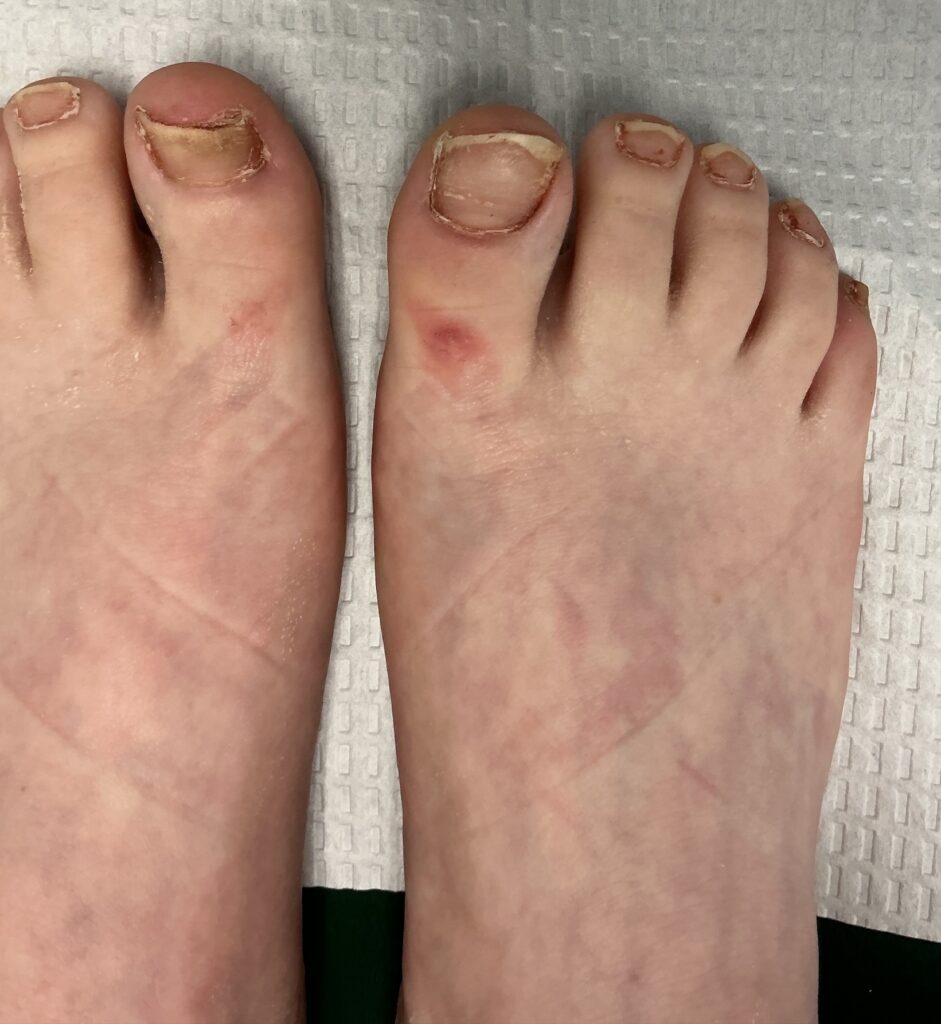
The patient’s final visit was June 22, 2026.
While the nails are still growing out, the improvement is dramatic:
- Significantly clearer nail growth at the base of the nails
- Reduced discoloration
- Improved nail appearance
- Healthier nail texture
- Visible replacement of damaged nail with new growth
Most importantly:
The patient is extremely happy with her results.
After Treatment
The Journey Isn’t Over
Even though treatment was completed in June, the nails will continue to improve as they grow.
Most patients continue to see progress for 12–18 months after treatment because healthy nail must slowly replace the damaged portion.
Interestingly, toenails typically grow faster during the summer months, making this an excellent time to begin treatment.
Thinking About Treating Your Fungal Toenails?
If you’re embarrassed by your toenails, avoiding sandals, or tired of covering them with nail polish, you’re not alone.
Fungal toenails are incredibly common, but they don’t usually improve on their own.
At Lighthouse Foot and Ankle Center, we combine advanced laser therapy with a comprehensive treatment strategy tailored to each patient.
The earlier you start, the sooner healthy nail can begin growing in.
Ready to learn your options?
Call 207-774-0028 or schedule an appointment at lighthousefootandankle.com to discuss whether fungal nail treatment may be right for you.
Patient note: Individual results vary. These photographs are shared with patient permission. This patient completed a treatment plan consisting of Class IV laser therapy, weekly fluconazole, daily Tavaborole, and a daily foot care regimen.
