
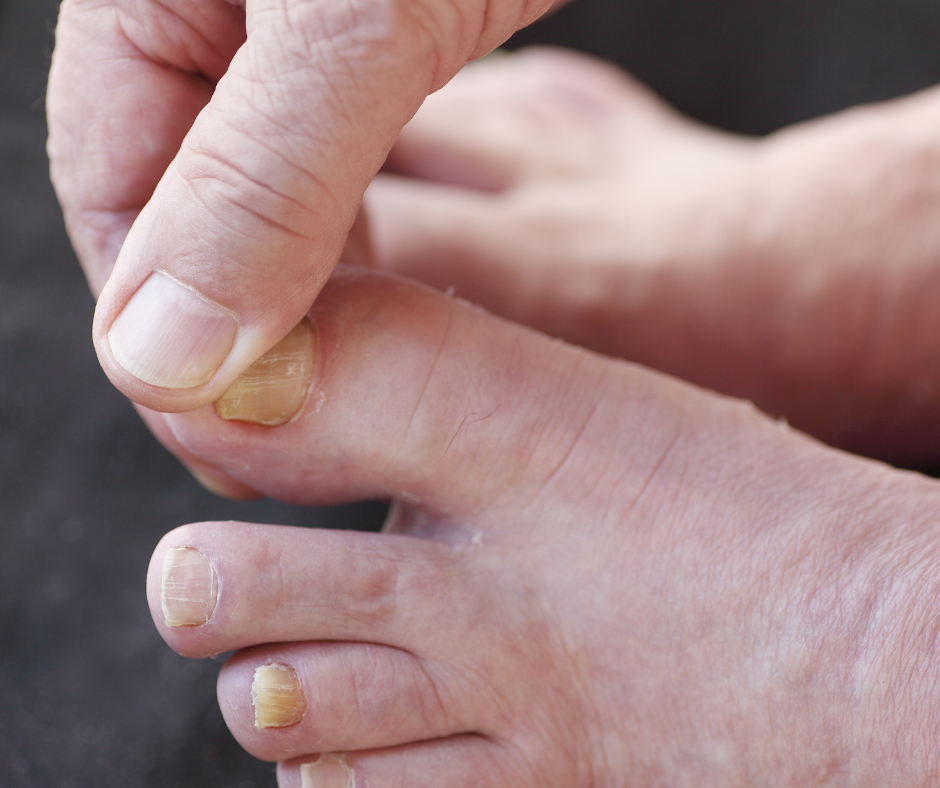
“If it’s not fungus, why don’t my toenails look healthy?”
This is one of the most common questions I hear in my office.
Many people assume that every thick, yellow, brittle, or discolored toenail is caused by fungus. While fungal infections are common, they’re only one of many reasons a toenail may not look the way you’d like.
That’s why we don’t guess.
It Starts with an Accurate Diagnosis
If your toenails are thickened, discolored, lifting, or brittle, we often obtain nail samples for a PAS (Periodic Acid-Schiff) stain—a laboratory test that looks for fungal organisms within the nail. It is one of the most accurate ways to diagnose a fungal nail infection.
Sometimes the test is positive.
Sometimes it’s negative.
A negative result doesn’t mean nothing is wrong. It simply tells us that fungus isn’t the cause, allowing us to focus on what is.
If It’s Not Fungus, What Could It Be?
There are many reasons toenails change over time, including:
- Repeated trauma from walking, running, hiking, or sports
- Shoes that crowd the toes
- Bunions or hammertoes that place constant pressure on the nail
- Previous injuries to the nail matrix (the area where the nail grows)
- Aging, which naturally slows nail growth
- Dry, brittle nails
- Skin conditions such as psoriasis or eczema
- Certain medications or underlying medical conditions
Often, more than one of these factors is contributing to the problem.
Healthy Nails Need the Right Environment
Think of your toenail like a garden.
If the soil is poor, the roots are damaged, or the environment isn’t healthy, the plant won’t thrive—even if there’s no disease.
Your toenails are no different.
Healthy nail growth depends on:
- Reducing repetitive pressure and trauma
- Proper foot mechanics
- Healthy skin surrounding the nail
- Good daily nail care habits
- Time
Toenails grow slowly—only about 1 millimeter each month. It often takes 12 to 18 months for an entirely new nail to grow.
Treatment Depends on the Cause
Once we’ve determined that fungus isn’t the problem, we develop a treatment plan based on what’s preventing your nail from growing normally.
Depending on your needs, treatment may include:
- Shoe modifications to reduce pressure on the toes
- Custom orthotics to improve foot mechanics and decrease repetitive nail trauma
- Treatment of bunions or hammertoes that continually injure the nail
- Regular nail debridement to reduce thickness and improve comfort
- Hydration of the nail and surrounding skin with medical-grade products
- Onyfix®, a non-invasive nail correction system that can help guide the nail into healthier growth without surgery or downtime
Small improvements made consistently often produce the biggest changes over time.
Want Better-Looking Nails for a Wedding or Special Occasion?
Not everyone is willing to wait a year for a damaged nail to grow out.
If you have a wedding, vacation, graduation, reunion, or another special event coming up, KeryFlex® Nail Restoration may be an excellent option.
KeryFlex is a cosmetic nail restoration system that creates a natural-looking nail while your own nail continues to grow underneath. It doesn’t treat fungus or repair a damaged nail, but it can dramatically improve the appearance of damaged or misshapen nails. Nails can be painted directly after application.
Many patients appreciate having an option that lets them wear sandals with confidence while they’re working toward healthier natural nails.
Avoid the Guesswork
One of the biggest mistakes we see is patients treating a nail for fungus when fungus isn’t actually present.
Months—or even years—of antifungal creams, polishes, or home remedies won’t improve a nail that’s being damaged by pressure, trauma, or changes in the nail matrix.
An accurate diagnosis saves time, money, and frustration.
Healthy Nails Are About More Than Fungus
At Lighthouse Foot and Ankle Center, our goal isn’t simply to determine whether you have a fungal infection.
Our goal is to understand why your nails don’t look the way you want them to.
Whether that means treating a fungal infection, correcting the way the nail grows with Onyfix, improving foot mechanics with custom orthotics, restoring the appearance of a damaged nail with KeryFlex, or simply developing a plan to promote healthier nail growth over time, every treatment begins with understanding the cause.
Healthy-looking toenails don’t happen by chance. They happen when the right diagnosis leads to the right treatment.
If you’re unhappy with the appearance of your toenails, don’t assume fungus is the answer. The first step is finding out what’s really going on—and together, we can create a plan to help your nails look and feel their best.
