
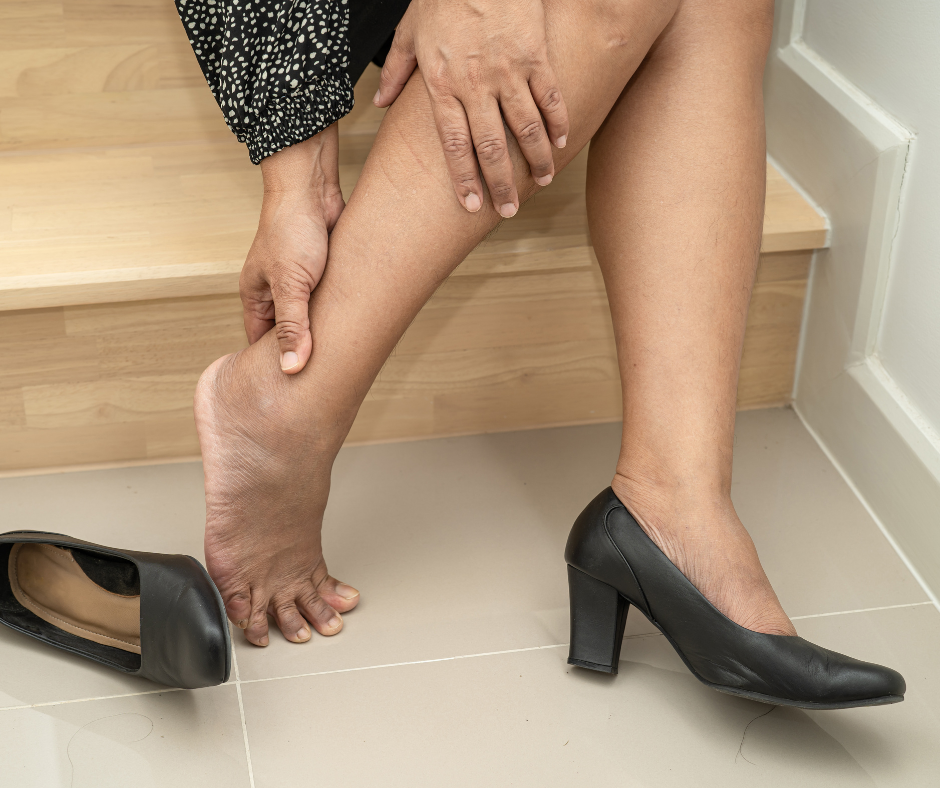
Most women expect menopause to bring hot flashes, sleep disturbances, mood changes, weight gain, and brain fog.
Few expect it to affect their feet.
Yet one of the most common patterns I see in practice is a woman in her late 40s, 50s, or early 60s who suddenly develops heel pain, Achilles tendon problems, stress fractures, or worsening foot fatigue despite doing the same activities she’s done for years.
She hasn’t started training for a marathon.
She hasn’t suffered a major injury.
She hasn’t dramatically changed her lifestyle.
So what changed?
In many cases, menopause may be playing a role.
Why Menopause Affects Your Feet
Most people think of estrogen as a reproductive hormone.
In reality, estrogen affects tissues throughout the entire body.
Estrogen receptors are found in bones, muscles, tendons, ligaments, and fascia. These receptors help regulate tissue repair, collagen production, hydration, elasticity, and the body’s response to stress.
As estrogen levels fluctuate during perimenopause and decline after menopause, the tissues that support your feet begin to change.
Because your feet absorb thousands of pounds of force every day, even subtle changes in tissue quality can become noticeable.
The result may be pain that seems to come out of nowhere.
Why Heel Pain Often Appears During Menopause
One of the most common complaints I hear is:
“I’ve never had foot problems before, and now my heel hurts every morning.”
If that sounds familiar, you’re not alone.
The plantar fascia is a thick band of connective tissue that supports the arch of your foot and helps absorb shock with every step.
What many women don’t realize is that estrogen receptors are present within fascial tissue, including the plantar fascia itself.
This means declining estrogen levels can directly affect the health and function of the plantar fascia.
As estrogen decreases, the fascia may become less resilient, less able to repair microscopic damage, and less tolerant of repetitive stress. Changes in collagen production and tissue hydration may further affect how the plantar fascia responds to the loads of everyday life.
The result is that activities you’ve tolerated for years can suddenly begin causing symptoms.
Many women tell me:
“Nothing has changed. I haven’t started running. I haven’t injured myself. Why does my heel suddenly hurt?”
The answer may be that your tissue has changed.
The plantar fascia that handled thousands of steps a day at age 35 is not necessarily the same plantar fascia at age 55.
This doesn’t mean heel pain is inevitable. It does mean that hormonal changes may be contributing to the problem in ways that are rarely discussed.
The Achilles Tendon Changes Too
The plantar fascia isn’t the only tissue affected.
The Achilles tendon is the largest tendon in the body and experiences tremendous forces during walking, hiking, exercise, and even everyday activities.
Like fascia, tendons contain estrogen receptors and rely on healthy collagen for strength and resilience.
As estrogen declines, tendon tissue may become less efficient at repairing the microscopic damage that occurs with normal activity.
This may help explain why some women suddenly develop Achilles tendonitis, pain at the back of the heel, calf tightness, reduced athletic performance, or longer recovery times after exercise.
Many women assume they simply need to stretch more.
Often, the story is much more complex than that.
Why Your Feet May Feel Different
Many women notice that their feet seem to change shape during midlife.
They’re not imagining it.
Over time, ligaments may become less supportive, muscles may weaken, and years of standing, walking, pregnancy, and daily activity begin to leave their mark.
The arch may gradually flatten.
The forefoot may widen.
Bunions and hammertoes may become more noticeable.
Patients often tell me:
“I’ve worn the same shoe size my entire adult life, and suddenly nothing fits comfortably anymore.”
That’s because the structure of the foot can change over time.
Supportive footwear becomes increasingly important during this stage of life.
The Overlooked Connection to Bone Health
Menopause doesn’t just affect soft tissues.
It affects bone health as well.
Declining estrogen levels accelerate bone loss, increasing the risk of osteopenia and osteoporosis.
While most people think about osteoporosis affecting the hip or spine, the feet and ankles can also be impacted.
One concern is stress fractures.
A stress fracture is not a sudden break. It’s a fatigue injury that develops when bone is unable to keep up with repetitive loading.
Women may experience persistent heel pain, pain that worsens with activity, localized tenderness, swelling, or symptoms that fail to improve with typical plantar fasciitis treatment.
Because stress fractures can mimic plantar fasciitis, they are sometimes overlooked.
This is one reason why an accurate diagnosis is so important.
Not every heel pain diagnosis is plantar fasciitis.
Weight Changes Add More Stress
Many women experience weight changes during perimenopause and menopause.
Even relatively small increases in body weight can significantly increase the forces moving through the feet.
With every step, your feet absorb and distribute those forces.
Over time, this additional load may contribute to plantar fasciitis, arthritis pain, tendon injuries, forefoot pain, and increased foot fatigue.
This isn’t about blame.
It’s about understanding why symptoms may appear even when your activity level hasn’t changed.
How We Help Women Stay Active During Menopause
The good news is that you don’t have to figure this out on your own.
At Lighthouse Foot and Ankle Center, we understand that foot pain during perimenopause and menopause is often about more than just your feet. It’s about staying active, maintaining your independence, continuing your exercise routine, traveling comfortably, and enjoying the activities that make life meaningful.
Treatment starts with understanding what’s actually causing your symptoms.
For some women, that means improving foot mechanics through supportive footwear and custom orthotics. The right shoe and the right support can significantly reduce strain on the plantar fascia, Achilles tendon, and joints of the foot.
For others, temporary taping techniques can provide relief while tissues calm down and heal.
When pain becomes more persistent, we may recommend radial shockwave therapy to stimulate healing and improve tissue function. We also utilize Class IV laser therapy as part of treatment plans for certain painful conditions to help reduce inflammation and support recovery.
Many women find that a combination of treatments works best. The goal is not simply to reduce pain for a few weeks. The goal is to help you continue walking, exercising, traveling, gardening, hiking, and living your life with confidence.
We also recognize that menopause affects far more than the musculoskeletal system.
That’s why we believe in collaborating with other healthcare professionals when appropriate. Whether it’s your primary care physician, gynecologist, endocrinologist, rheumatologist, physical therapist, or another specialist, we are happy to be part of your healthcare team.
Menopause is a journey, and having the right team can make a tremendous difference.
Menopause Doesn’t Mean Giving Up Activity
One of the biggest misconceptions I hear is that pain is simply part of getting older.
Yes, our bodies change.
But pain should not automatically be accepted as normal.
If heel pain, Achilles pain, foot fatigue, or recurrent injuries are limiting your walks, workouts, travel, pickleball games, or daily activities, there may be an explanation—and more importantly, there may be solutions.
Listen to What Your Feet Are Telling You
Sometimes foot pain is simply foot pain.
Other times, it’s your body’s way of telling you that something has changed.
If you’ve entered perimenopause or menopause and are suddenly experiencing foot or ankle problems, it’s worth paying attention.
Your feet may be revealing a bigger story about connective tissue health, biomechanics, hormone changes, and bone health.
At Lighthouse Foot and Ankle Center, we take the time to look at the whole picture—not just the symptom.
If you’re struggling with heel pain, Achilles tendon pain, stress injuries, or other new foot problems, we’re here to help.
Schedule an appointment today.
Lighthouse Foot and Ankle Center
23 Spring St., Suite B
Scarborough, Maine 04074
207-774-0028
www.lighthousefootandankle.com
Menopause is a journey.
Your feet don’t have to make it harder.
